

Why The Alinker Is A Great Tool For People With Down Syndrome
A look at how a three-wheeled walking bike is helping people with Down syndrome, at every age, stay active, independent, and part of the world at eye level.
For a person with Down syndrome, a good life tends to look a lot like anyone else's. Friends to see. A social life worth keeping up. The simple freedom to leave the house and go somewhere without the whole thing becoming an event. It is the kind of everyday freedom most of us are lucky enough to take for granted.
What gets in the way of it is rarely attitude or ability. More often, it is mobility. Whether a walk is even doable, and whether it can happen as often as they would like, without a single outing costing them for days afterward or wearing on their joints over the years.
This is usually where mobility aids come in, and for good reason. But they are not all equal. Some keep a person moving and out among people. Others make dependence the first thing anyone notices. The Alinker, a three-wheeled walking bike from Dutch inventor BE Alink, was built on a simple belief: a mobility tool should expand a life, not define it. What follows is how it supports both mobility and independence.
One thing up front. The Alinker is not a treatment or a therapy, and it does not cure or fix anything. It is a mobility tool. What it offers is a way to keep moving, stay active, and stay part of the world at eye level.
Section OneWhat Everyday Freedom Actually Means
The most important idea in the whole Down syndrome community is a simple one, and every leading advocate repeats it: see the person as capable, and work with them rather than for them. A child with Down syndrome wants what other children want, which is to keep up with friends and join in. An adult with Down syndrome wants what other adults want, which is to come and go, make choices, and be treated as the grown person they are.
Mobility sits underneath all of it. When getting around is hard or tiring, the choices shrink first. The walk to meet a friend gets skipped. The outing gets declined because it is too far. Slowly the world contracts to the size of the living room, and with it goes the sense of being a full participant. Protecting mobility is really about protecting that everyday agency.

Section TwoThe World That Can Get Smaller, And How To Keep It Open
There is a genuinely hopeful fact behind this. In 1983, the average life expectancy for a person with Down syndrome was about 25. Today it is around 60. People with Down syndrome are living long, full adult lives, which means mobility and staying active matter across many more decades than they once did.
Staying active is one of the strongest things that keeps a life open. Movement helps keep the legs strong, supports the joints, protects heart and general health, and keeps a person out among people rather than at home. That last part is not a small thing. Research consistently finds that a large share of adults with Down syndrome do not get enough physical activity, which makes any tool that makes movement easier and more inviting genuinely valuable.
Section ThreeHow The Alinker Keeps You Moving, At Eye Level
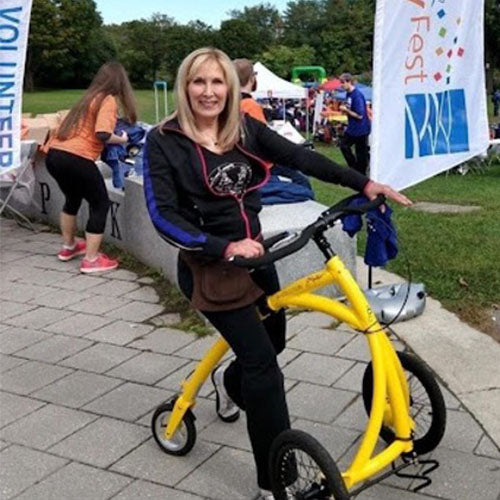
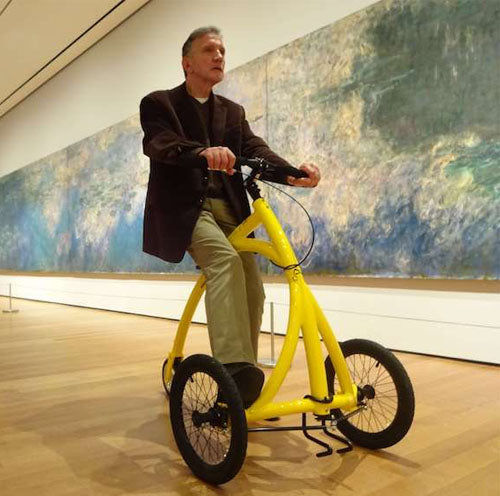
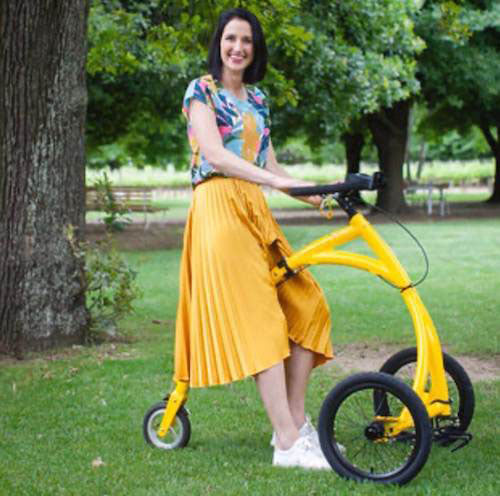
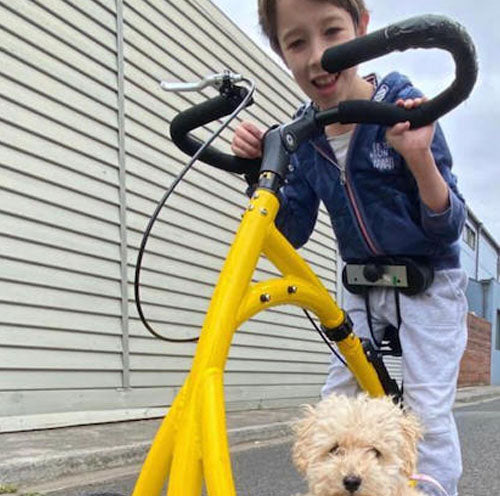
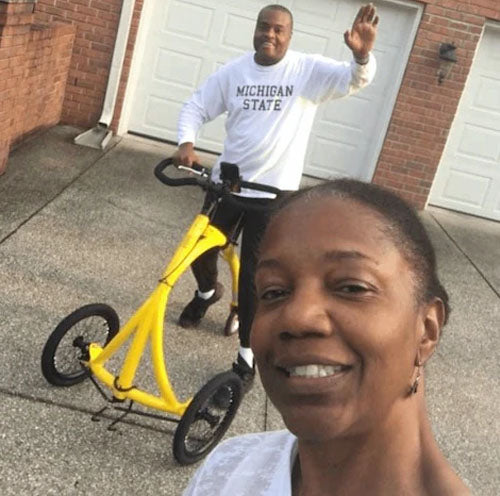
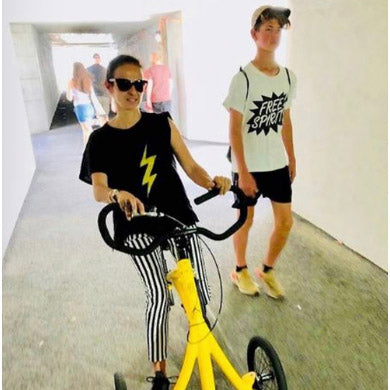
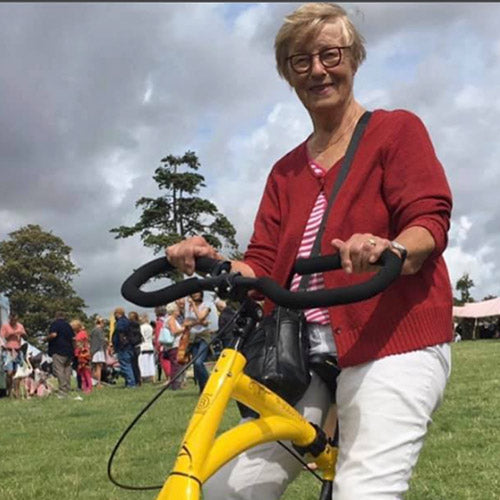
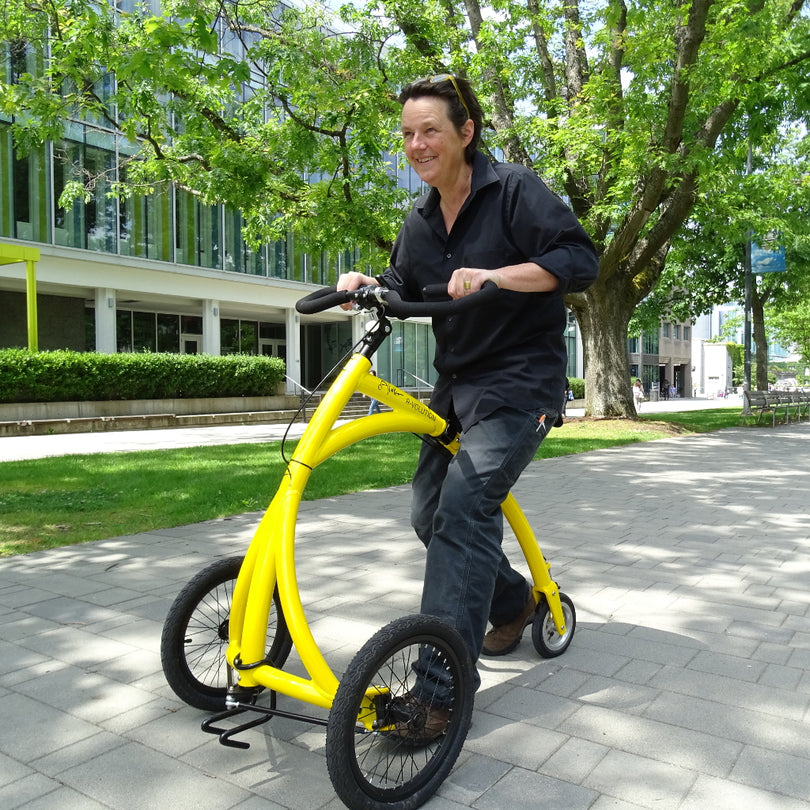
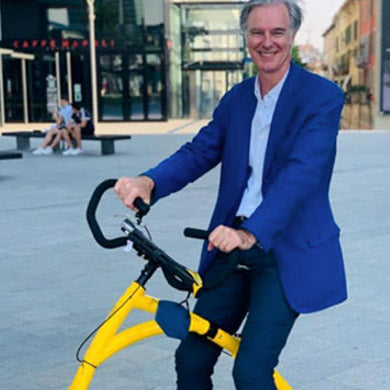
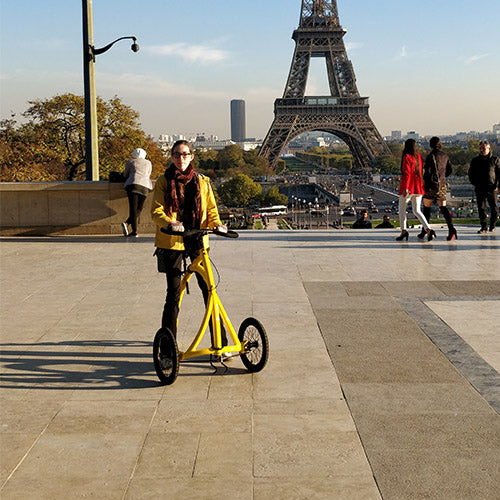
The Alinker looks like a small bicycle without pedals. It has three wheels, a saddle set at standing eye level, and handlebars at the height a cyclist would use, with no motor and nothing to pedal. You sit on the saddle, keep your feet on the ground, and walk in much the same motion you would use without it.
What the saddle does is the whole point. It carries most of the body weight, so the legs are free to keep moving without carrying the full load. For people who have lower muscle tone and looser joints, which are common with Down syndrome, that is a gentler way to stay active and keep the legs working. The wide three-wheel base adds stability for balance, and the rider moves under their own power.
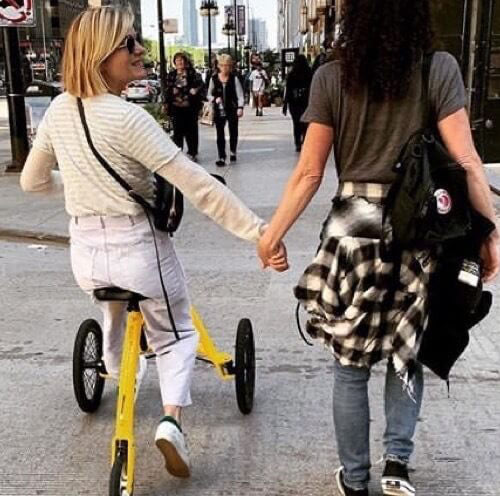
You sit, your feet stay on the ground, and you walk. The saddle carries the weight your joints do not have to, and your eyes stay level with everyone around you.
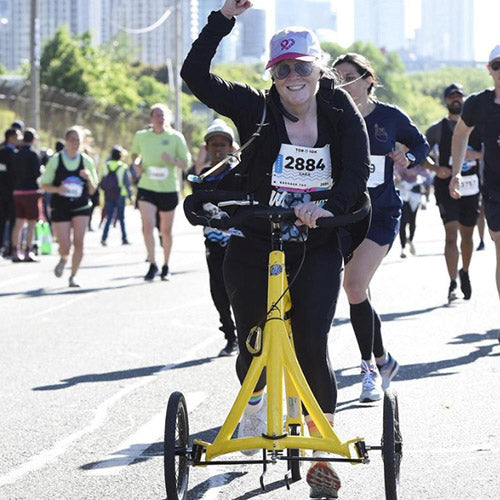
That last part matters more than it sounds. Moving through the world at the same height as everyone else is a quiet social equalizer. Because the Alinker reads as a cool bike rather than a medical device, and comes in bright yellow, people see the person first. That changes how the world responds, and how it feels to be out in it.
Section FourIs It Right, And Is It Safe?
This is the most important section on the page, so we are going to be careful and honest. The Alinker suits people with Down syndrome who can already walk and bear weight on their legs, can balance while seated and moving, and can learn to steer and use the hand brakes, with support while building the skill. It is not right for everyone, and there are real safety questions to ask first.
Please check with a doctor first, especially about the neck.
People who have Down syndrome sometimes have specific things worth checking. The most important one is atlantoaxial instability (AAI), a looseness in the upper neck that is more common with Down syndrome (found in roughly one in ten adults). Anyone with diagnosed AAI, or with symptoms such as neck pain, a stiff neck, a head tilt, changes in walking or in the use of the hands or arms, or new weakness, should get medical clearance before using any walking bike and should follow their doctor's guidance. We would always rather you check than guess.
Use the quick check below to see where things stand. It is built around safety and fit, not a sale.
A quick fit and safety check
Four questions, answered honestly. This is about finding the right and safe fit.
Section FiveWhat Alinker Riders Say
The Alinker has been part of daily life for more than 6,500 riders across four continents, of many ages and conditions, with a shared reason for riding: to keep moving and stay part of the world.

One of them is Eva, a young rider with Down syndrome in the Netherlands. On the Alinker, Eva was able to avoid a series of orthopedic surgeries she had been heading toward, and she no longer needs the pain medication she once relied on. Her family describes her as the cool kid at her school now, able to join in every activity, with a sense of self-worth that has grown along the way.
With the Alinker I am independent again. Antonia, Alinker rider, Netherlands
Playing with my kids again. Priceless. Nuri, Alinker rider, Netherlands
It is a game changer. I can keep up with my son on a walk while activating my brain without overstressing my body. Selma Blair, actor and Alinker rider
The phrase that comes up more than any other, across ages and conditions, is a simple one: riders say their world got bigger. That is the real promise here. Not a fix, but a bigger world and a fuller place in it.
Section SixHonest Answers To The Real Questions
Tap any question for a straight answer.
This is the first thing to check. Atlantoaxial instability is a looseness in the upper neck that is more common with Down syndrome. Anyone with diagnosed AAI, or with symptoms like neck pain, a stiff neck, a head tilt, or changes in walking or hand and arm use, should not use a walking bike without medical clearance. Talk to the rider's doctor first and follow their guidance. When in doubt, get it checked.
Yes to both, and that is normal. Most new riders take a short while to get used to the saddle and the motion, and to steering and braking. The advice from experienced families is to start small, on flat and familiar ground, with someone alongside while the rider builds confidence and skill. Many riders are comfortable on their own after the first week or two, and some will always ride best with support nearby.
Size is set by inseam, not age, and the Alinker is adjustable, so one range covers a wide span of riders from about eight years old up to adults. The size finder further down the page gives a quick recommendation. Because people with Down syndrome are often shorter in stature, the fit is worth confirming with our team, and the smallest frame, the 22 inch, suits shorter inseams. We will help you get it right before you commit.
It can be, and it is worth thinking through honestly. The rider steers and squeezes the brakes with their hands, so this works best for riders who can learn and remember to do that reliably, especially around other people or traffic. Starting in calm, controlled spaces with supervision is the safe way to build that skill. Our team is happy to talk through your specific situation before you decide.
No. The Alinker is a mobility tool, not a medical treatment, and it does not replace anyone's care team. It works alongside doctors and physical therapists. Think of it as a way to stay active and get out into the world day to day. Always check with the rider's own clinician about what is right for them.
If the rider cannot bear weight or take steps, cannot balance while seated, has diagnosed atlantoaxial instability or unresolved neck symptoms, or has awareness challenges that would make steering and braking unsafe even with support, the Alinker is not the right tool. We would rather tell you that now than have you end up with a bike that does not fit the rider's life.
What An Alinker Gives You
For the riders it fits, this is what the bike delivers.
- A way to stay active and independent. Movement under your own power, at your own pace, day to day.
- Weight taken off the joints. The saddle carries most of the body weight, which is a gentler way to keep moving for people who have lower muscle tone and looser joints.
- Eye level with everyone. Upright, at standing height, seen as a person first rather than a device. A quiet social equalizer.
- A tool that reads as a cool bike. Bright yellow, not a medical aid. It changes how the world responds.
- A fit across ages. Sized by inseam and adjustable across a wide range, so one bike can grow with the family.
- A bigger world. The outings that got skipped, the friends across the park, the reasons to head out the door. Getting back out is the whole idea.
What It Costs, And Why Families Call It Worth It
Here is the honest part. You will see the price on the next page, so we would rather you hear the whole picture first. A new Alinker is $2,830.
It is not a small purchase, and we are not going to dress it up as one. But look at what it actually is. Not a gadget that gets used twice and parked in a closet, but a tool the rider reaches for day after day, for years, to get out the door, stay active, and be out in the world at eye level. Measured against every outing it makes possible and the independence it protects, families tell us again and again that it became one of the best things they ever bought. One rider summed the whole thing up in a single word: priceless.
And you do not have to pay all of it at once, or take the leap sight unseen. There are three ways in, and the bike comes with 15 days to actually try it.
Section SevenGetting An Alinker Into The Rider's Hands
First, the size. The Alinker comes in three frame sizes, set by inseam rather than height or age, and each has an adjustable saddle for extra range.
Find the right size in seconds
Move the slider to the rider's inseam and we will point you to the right size.
Prefer the full reference? Here are the three sizes.
| Size | Inseam Range |
|---|---|
| The 22" | 22" to 26.5" |
| The 27" | 27" to 31.5" |
| The 32" | 32" to 36.5" |
If the rider is between two sizes, or you are not sure, our team will walk you through the fitting before you commit to anything.
Try it for 15 days.
Every Alinker bought from thealinker.com comes with a 15-day trial. It takes a little time to get comfortable on the bike, so you get a full 15 days from delivery to actually use it. If it turns out not to be the right fit, contact the team within that window to start a return. You do not have to decide everything today, and you do not have to guess.
And there are three ways to cover the cost.
Buy it outright
$2,830, shipping in about one to two weeks from the US warehouse, with the 15-day trial included.
0% rent-to-own
Rather spread it out? The Alinker's own rent-to-own program splits the cost over eight months at 0% interest. A small deposit gets the rider started.
Community crowdfunding
For families who cannot buy outright, the Alinker community runs crowdfunding campaigns for individual riders, often topped up by riders who already own one. It is how many riders got their start, and it says something that owners chip in to put someone new on a bike.

The world does not have to get smaller.
Keep moving. That is what the Alinker is for.
Independence, for a person with Down syndrome, is mostly made of ordinary freedoms: heading out the door, meeting a friend across the park, taking the long way home because the day is nice, being at eye level with everyone else. For the riders it fits, the Alinker is a way to keep all of it, under their own power. If the rider can already walk a little and a doctor confirms it is safe, the next step is simple: see it, check the size, and try it for 15 days.