


Why The Alinker Is A Great Tool For People Living With MS
A look at how a three-wheeled walking bike is helping people stay in motion, keep up, and protect their energy for what matters most.
For thousands of people living with MS, the Alinker does something no cane, walker, scooter, or wheelchair can do. It gives back the energy that walking has been taking from them.
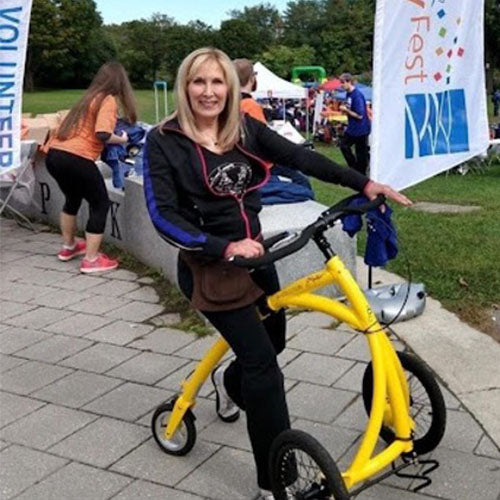
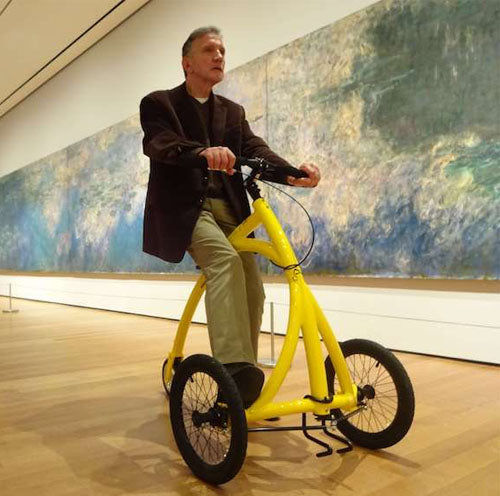
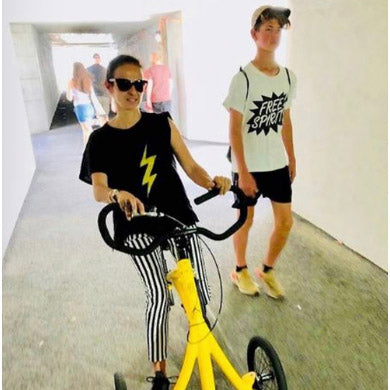
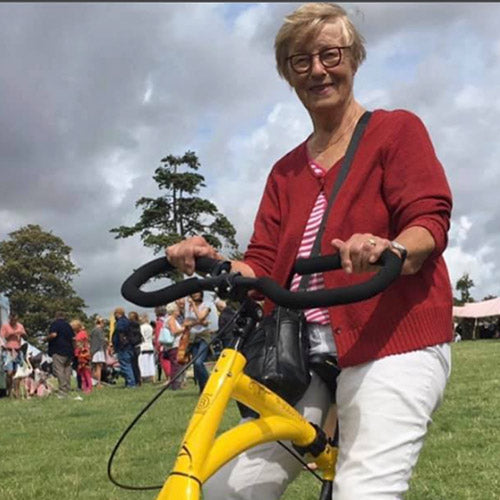
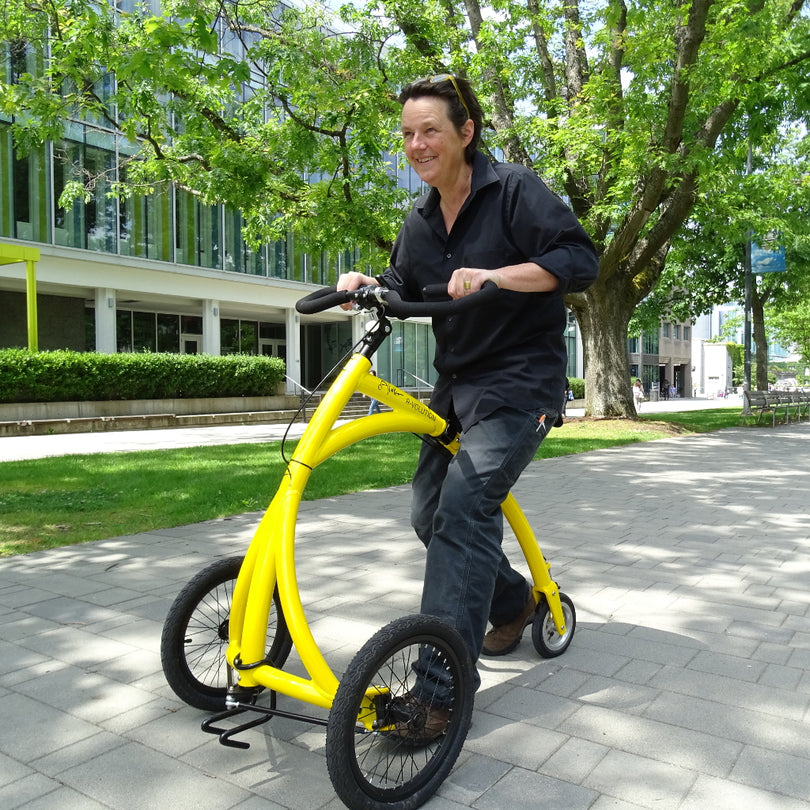
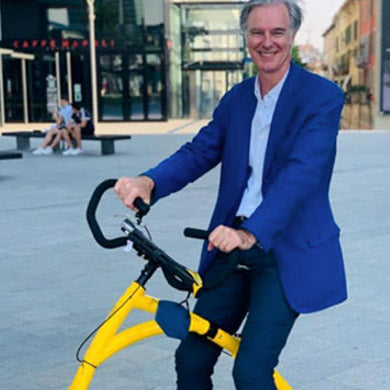
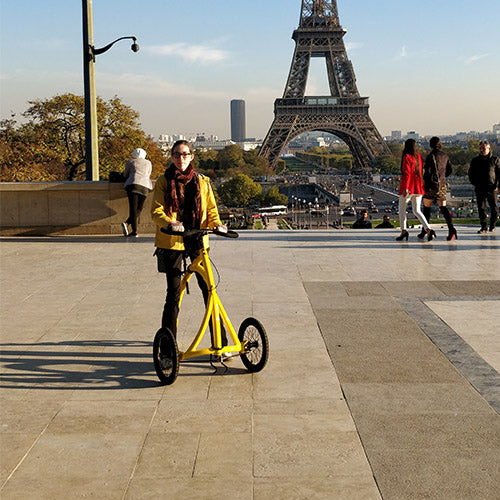
The mechanics are simple. The Alinker is a three-wheeled walking bike. The rider sits on a saddle at standing eye level, keeps their feet on the ground, and walks in the same motion they would use without the bike. The saddle takes most of the body weight. The legs do what is left.
That small change in mechanics translates into a much bigger change in how the day plays out. This page is a look at why, who the bike works for, and what the MS community keeps saying about it after spending time with one.
Section OneSpoon Theory In 60 Seconds
If you already speak this vocabulary, please skip to the next section. If not, this is the framework that the rest of the page is going to lean on, and it is worth the minute it takes to absorb.
In 2003, a young woman named Christine Miserandino was sitting in a diner with her best friend, trying to explain what it felt like to live with lupus. She gathered every spoon on the table, handed them to her friend, and explained that this was roughly how many units of energy a person with a chronic illness gets to start the day with.
Every activity costs a spoon or two. A shower might cost two spoons. Making breakfast might cost one. Walking to the mailbox might cost another, sometimes more, depending on how the legs are cooperating that morning. Once the day's spoons are gone, the body crashes, and there is no way to borrow against tomorrow.
People with healthy bodies have what feels like an unlimited supply of spoons, which is why they never have to count. People living with MS, lupus, fibromyalgia, ME/CFS, and dozens of other chronic conditions are working from a smaller and more variable allotment. Some days the supply is generous, and some days it is not.
The metaphor caught fire because it gave the chronic illness community a way to explain their experience that the people around them could finally picture. Two decades later, "spoonie" has become a piece of shared vocabulary across the entire community, and the MS world in particular has embraced it.

Section TwoWhy Most Mobility Tools Don't Fit MS
Most mobility tools were not designed with MS in mind. The cane and the walker were built to give stability to bodies that need it. The scooter and the wheelchair were built to replace walking when the legs cannot do it anymore. MS sits between those two solutions, and it does not fit either one cleanly.
The cane and the walker provide balance, but they do not take any meaningful weight off legs that are already running on fumes. They reduce the chance of a fall. They do not reduce the cost of getting where you want to go.
The scooter and the wheelchair go in the other direction. They remove the walking entirely. The per-distance cost drops to almost nothing, but so does the cardiovascular and muscular work the body still wants to do. For someone living with MS, that tradeoff matters. Use-it-or-lose-it is not a marketing slogan in the MS world. It is a clinical principle that physical therapists work into nearly every treatment plan.
One member of the MyMSTeam community summed up the gap this way.
"I used to spend half my spoons just on the walk to the shower in the morning." MyMSTeam community member
A second account from a 2026 piece in MS News Today captured the social cost that builds on top of the physical one.
"I felt very self-conscious about my barely walking, and I just ended up staying home. I was concerned about tripping, falling, and then going someplace I hadn't been before." MS News Today, January 2026
What neither the cane nor the wheelchair addresses is the in-between. The legs work. They just cost more to use than the day's supply of energy can support. That is the gap the Alinker was designed for.
Section ThreeHow The Alinker Was Designed For This
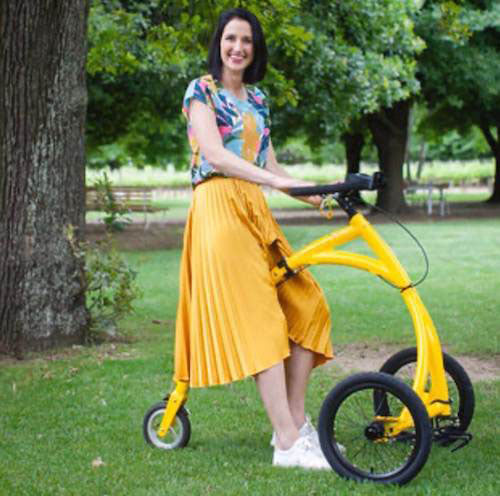
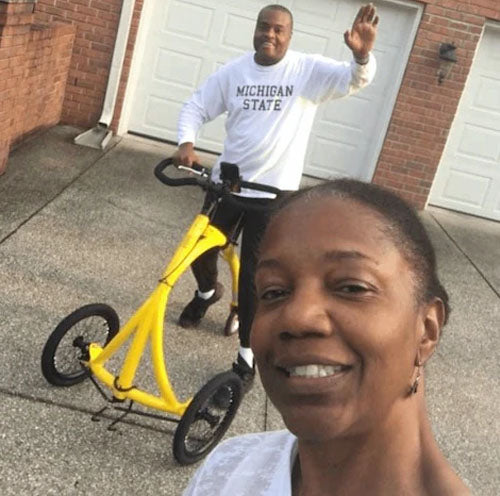
The Alinker looks like a small bicycle without pedals. Three wheels, a saddle at standing eye level, handlebars at the height a cyclist would use. No motor. No pedals. The rider sits on the saddle, keeps their feet on the ground, and walks in much the same motion as without the bike.
What the saddle does is the entire point of the design. It takes roughly seventy percent of the body weight. The legs handle what is left.
For someone living with MS, that translates into reclaimed energy. Walking a quarter mile without any mobility aid might cost three or four spoons on a good day, and considerably more on a bad one. The same quarter mile on an Alinker, with the saddle absorbing most of the body weight, tends to cost about one. The legs are still doing the walking motion. The cardiovascular system is still doing real work. The muscles are still firing. What changes is the gravitational tax that makes MS walking so expensive in the first place.
Dave Bexfield, a long-time MS reviewer who has tested a wide range of mobility tools, measured this himself. He compared his walking distance on the Alinker against the same distance using forearm crutches and a traditional walker. Same body, same day, same conditions.
"Four to five times over using forearm crutches or a walker." Dave Bexfield, MS reviewer
That is the same amount of energy spent, producing four to five times the distance covered.
It is also why the community has settled on its own way of describing what the bike does. Riders rarely talk about reduced energy expenditure per step. They talk about getting their spoons back, by which they mean that the walk to the mailbox now costs one spoon instead of three, leaving two for the rest of the day.
Section FourWhat People Living With MS Are Saying About It
The most-cited Alinker testimonial in the MS community did not come from a paid spokesperson. It came from Anna Connors, who is living with MS and described what changed in language her own physical therapist eventually started borrowing.
"Because I'm moving the muscles that are no longer supposed to move, I'm forcing them in a way to see that they can keep moving." Anna Connors
What that has meant for her in practical terms is that she stopped having to choose between walking and the rest of her day. She did not have to bank the whole morning's energy supply against the commute.
Jackie Zimmerman, an MS advocate who reviewed the Alinker for HealthCentral, captured a different angle on the same experience.
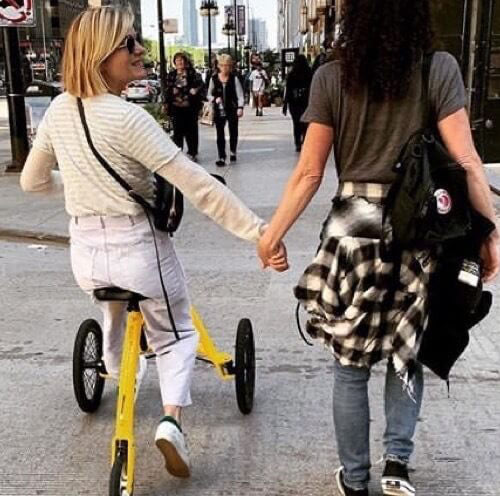
"It felt so good to be able to keep up with those around me." Jackie Zimmerman, HealthCentral
For many people living with MS, "keeping up" is loaded vocabulary. Most have spent years being told to take their time. The cost of catching up tends to be brutal. The Alinker reduces that cost enough that catching up becomes possible again.

The third account comes from Caroline Howlett, who has progressive MS and wrote about her experience in the MS Society UK community blog.
"Sixteen years ago, I could walk around Norwich for the day. Fast forward to last spring when I transitioned to using my wheelchair full-time." Caroline Howlett, MS Society UK
The shrinking world is one of the most universal experiences in the MS community. It happens slowly. Activities that were once part of an identity get crossed off the list, one at a time, because the round-trip cost in energy exceeds whatever the body has to spend on a given day.
What the Alinker has been doing in the experience of riders who have used one for a while is delaying or reversing that contraction. Returning riders describe the same kinds of small but meaningful changes.
"I went to the farmer's market for the first time in two years."
"I made it through a full day of teaching, and I still had something left for dinner with my family."
"I walked the dog past the corner where I used to have to turn back."
"My anxiety dropped from a level ten to a level two after I got back on my new Alinker."
"I'm not the disabled teacher anymore. I'm just their teacher."
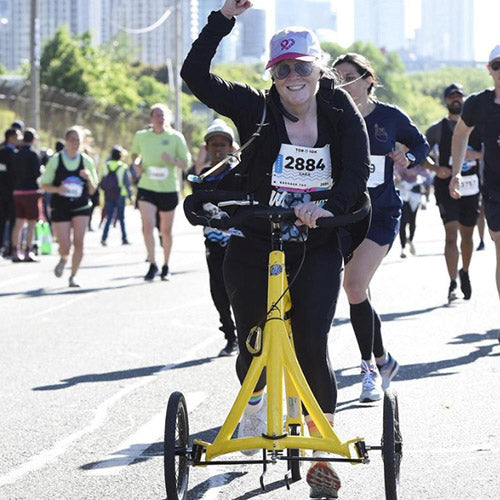
The pattern across these accounts is consistent. Riders do not talk about the bike itself. They talk about the places it took them to, the people they were able to keep up with, and the evenings they did not have to skip. The bike is the means. The destinations are the point.
Section FiveAn Honest Conversation About What The Alinker Can And Cannot Do
For ten years, the Alinker has been part of the daily lives of thousands of people living with MS. It is not a medical treatment, and we do not pretend it is. It is a mobility tool that gives you back range, distance, and time. Here is what we know it does, where it fits in your broader picture, and where it does not.
What the Alinker does is reduce the cost of walking. It lets you cover more ground on the same supply of energy. It keeps your legs engaged in the work they are still doing, instead of replacing that work the way a scooter or a wheelchair does. It puts you back at standing eye level with the people in your life. Across the riders we have heard from, the most consistent description is that the world stopped shrinking.
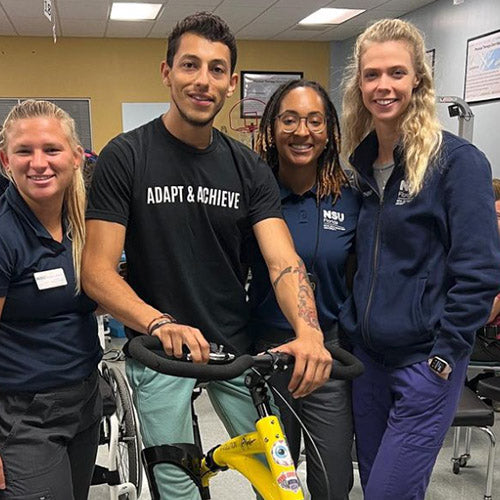
The Alinker is a complement to your treatment plan, not a substitute for it. It works alongside your DMT, your physical therapy, and your neurologist. A growing number of MS physical therapists, including the well-known Dr. Gretchen Hawley DPT MSCS, recommend the bike to their patients for that reason. It is part of a broader picture, not a stand-alone fix, and it does its best work when treated that way.
There is a learning curve, and we are upfront about it. Most new riders describe what the community calls a "wobble week" while the body adjusts to the saddle and the new motion. Within seven to ten days, the bike feels natural. The advice from longtime riders is to keep the first few outings small. A familiar park, an empty parking lot, a friend or family member nearby for the first ride. By the second week, most riders are out on their own.
Heat is still heat. The Uhthoff phenomenon does not disappear because the Alinker is now part of your day. What changes is how much of your heat-amplified fatigue gets burned on the walking itself. For riders in warmer climates, this difference is often what determines whether you stay home or go at all.
There is one situation where the Alinker is not the right tool. If MS has progressed to the point where a full-time wheelchair is necessary for daily mobility, the bike will not work. It requires the ability to bear weight on both legs intermittently. We will tell you that, and so will the community. We would rather have you skip the purchase than end up with a bike that is wrong for you.
The piece of advice that the longest-term Alinker riders pass on to people considering the bike is this. The change tends to show up in specific, concrete moments rather than as a sweeping transformation. A grocery run that did not end in a crash. An evening with energy left for dinner. A walk past a corner that used to be the turning-back point. Those moments are the proof, and they are what most riders end up describing when they look back on the first year.
Section SixWhat The Alinker Costs
The Alinker is a meaningful purchase, and we do not pretend otherwise. It is built to be used hard, and most of our riders use the same bike for years on end.
What sets the cost apart from the rest of the mobility market is what it gives back. A rollator costs less and gives you stability. A scooter costs more and replaces the walking altogether. The Alinker does what neither of those tools can do, which is reduce the cost of walking without taking the walking away from you. For someone living with MS, that is what makes the Alinker pay for itself in the first season, and keep paying for itself for years after that.
The next section covers the three ways to get one, including a rent-to-own option for riders who would rather spread the cost across paychecks or disability income.

What An Alinker Gives You
Here is what the bike delivers to riders living with MS, pulled together from everything above.
- Up to 5x more distance on the same energy. Measured by reviewer Dave Bexfield against forearm crutches and a traditional walker. Same body, same day, same conditions.
- Standing eye level with the people around you. No stooping over a rollator. No looking up from a wheelchair. Conversations happen at the height everyone else is at.
- Legs that keep doing the walking motion. The Alinker supports your body weight without replacing the work your legs still want to do. For MS, the use-it-or-lose-it principle is a clinical one.
- A mobility tool that does not look like one. The bright yellow bike reads as a bike, not as a medical device. The stares change category from pity to curiosity.
- A community of more than 6,500 riders. Across four continents, organized around the #keepmoving hashtag, supporting each other on Facebook and at meetups. You do not ride one alone.
- Reclaimed energy for what matters at the end of the day. The conversations, the cooking, the bedtime story, the evening that does not end in a crash.
Section SevenThree Ways To Get An Alinker
The Alinker comes in three sizes. The right size is determined by inseam, not height.
| Size | Minimum Inseam |
|---|---|
| Happy Small | 22" |
| Small | 27" |
| Medium | 32" |
If you are unsure of your size or between two of them, our team will walk you through the fitting process before any commitment is made.
There are three ways to get an Alinker into your hands.
Buy it outright
Full payment, with shipping in roughly two to three weeks from the US warehouse. Mediums and Happy Smalls are kept in stock. Smalls ship on the next available batch from the manufacturer.
Our 0% rent-to-own program
For riders who would rather spread the cost across paychecks or disability income, we run our own 0% interest rent-to-own program. A small deposit gets you started, and the remainder is paid across eight months. The bike arrives on the same timeline as a full purchase.
Community crowdfunding through Cocopay
For riders who cannot afford the bike outright and are not in a position to take on monthly payments, our community runs crowdfunding campaigns on behalf of individual riders through Cocopay. More than 257 campaigns have been completed to date, and they are often topped up by other community members who already ride one themselves. This is the pathway that funded our first launches back in 2014, and it is still used today.
A network of physical therapists, including MS-specialist Dr. Gretchen Hawley DPT MSCS, recommends the Alinker as part of their patient programs. The bike is not insurance-covered, and it is not distributed through medical equipment channels. We have chosen for ten years to stay outside the insurance system and sell direct. That is why most MS specialists have not heard of it yet, and why the community has been the way most riders find out it exists.
If you are ready to see the bike, this is where it lives.
Keep moving.
That is what the Alinker is for.
That has been the bet our community has been making for ten years. Not that the bike fixes MS, and not that it gives anyone a body they do not have. Simply that the energy a person living with MS spends each day is too valuable to pour into the walking itself when there is a way to keep walking that costs less.
More than 6,500 riders across four continents have made the trade. The bike is built. The community is here. The next move is yours.