
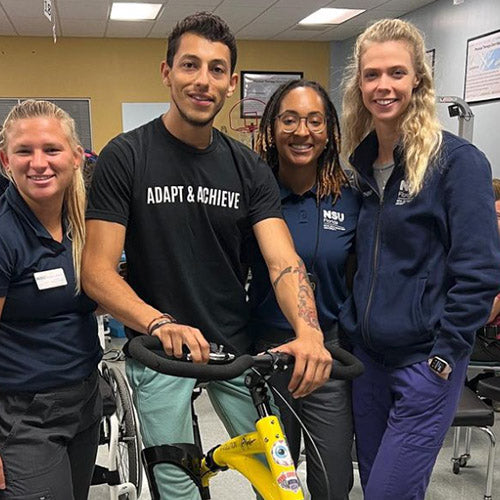
Riders span school age to ninety, every condition imaginable, and four continents. They keep saying their "world got bigger." Here's what's drawing 6,500+ of them in.

A rider named Anna Connors, who has multiple sclerosis, said this:
"Because I'm moving the muscles that are no longer supposed to move, I'm forcing them in a way to see that they can keep moving."
A teenager with cerebral palsy in Alabama said:
"I felt more visible because of the bright yellow color."
A schoolteacher with multiple sclerosis, returning to her classroom after years away, said:
"I'm not 'the disabled teacher' anymore, I'm just their teacher."
Three different riders. Three different conditions. Three different decades of life.
All describing the same bike.
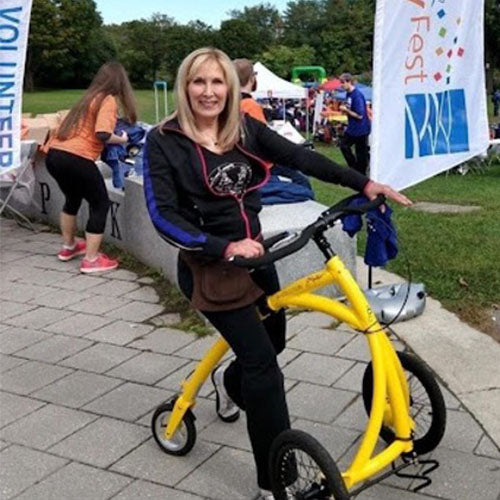
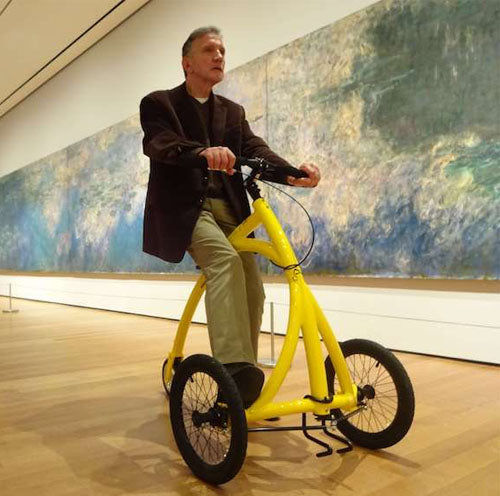
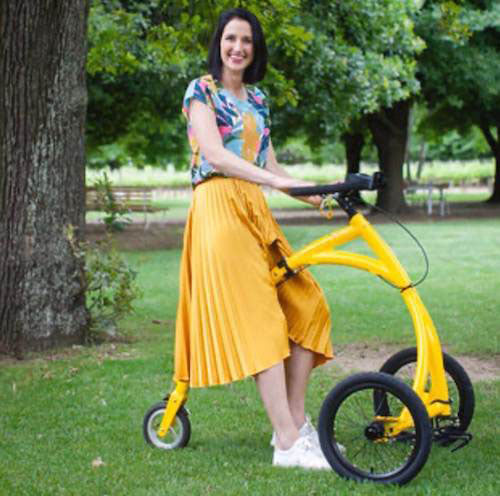
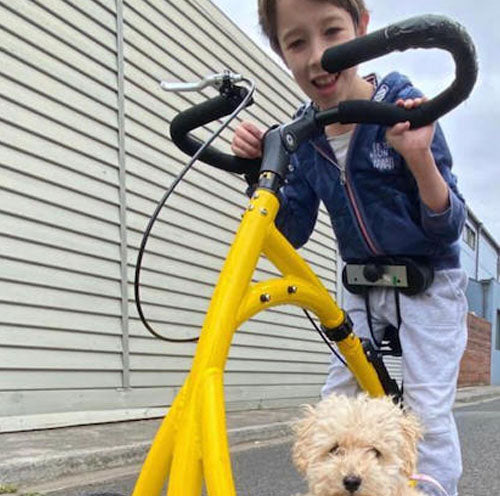
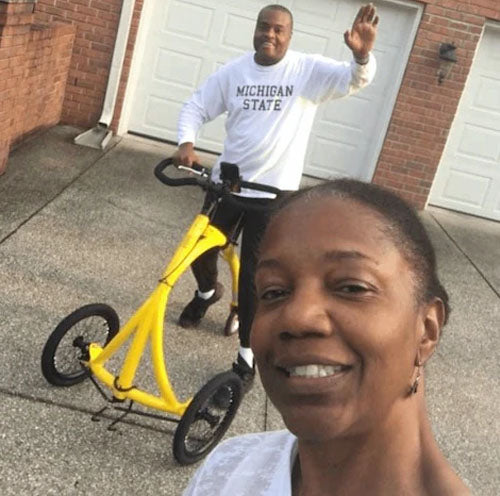
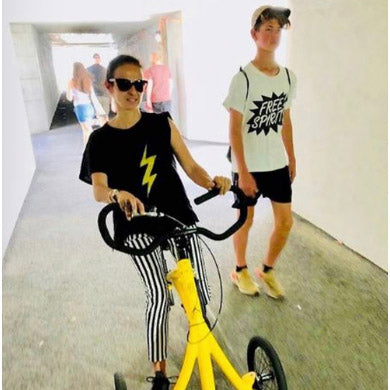
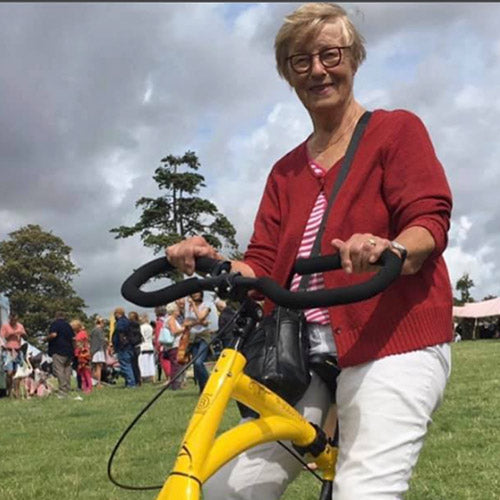
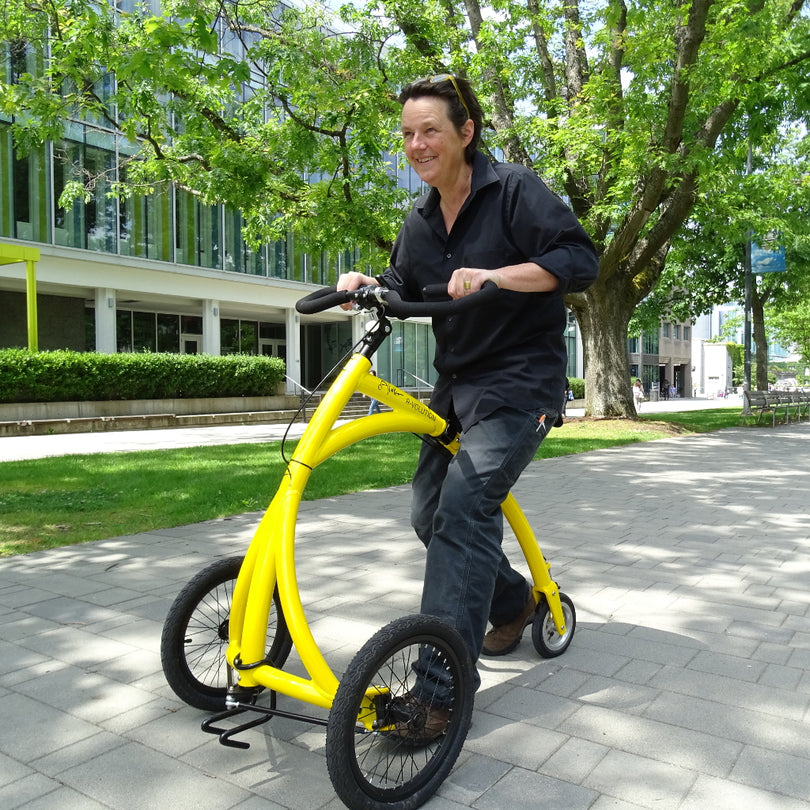
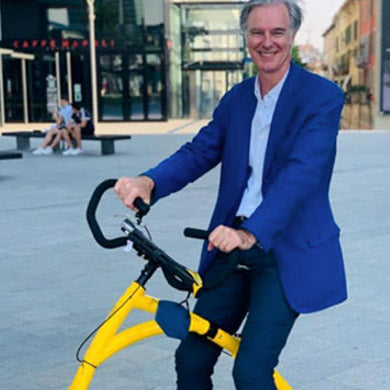
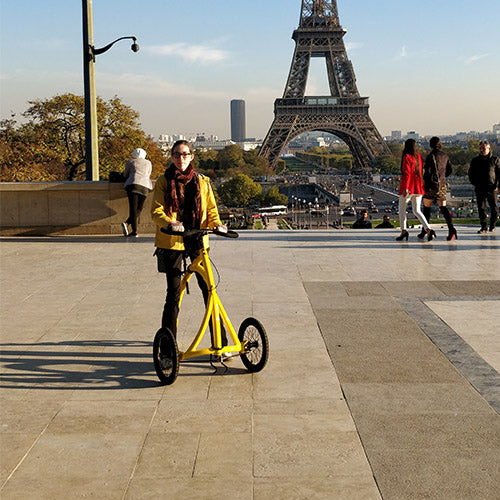
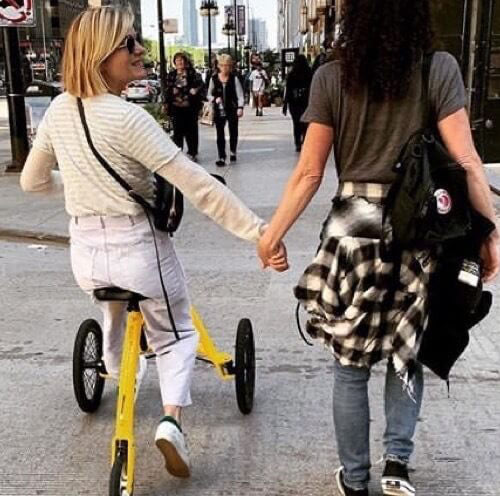
It's called the Alinker. A bright yellow three-wheeled walking bike that's been quietly connecting people back to life for the past decade. Not a wheelchair. Not a scooter. Not a walker. The rider sits on a saddle, their feet stay on the ground, and the legs do the walking while the bike carries the weight that's gotten harder to carry on its own.
Today, more than 6,500 people across four continents ride an Alinker, with 1,600 of them gathering daily in the brand's Facebook community. They share photos from real driveways and real parks. They tag each other. They answer questions from people considering the bike. And they fund crowdfunding campaigns for new riders who can't afford one on their own. More than 257 such campaigns have been completed to date.
Discover why thousands of people are joining the Alinker movement and getting back to the parks, classrooms, and grocery stores they thought they'd left behind. Here's why:
1. It brings riders back to eye level
Most mobility devices put the rider below the conversation. A wheelchair seats them. A walker bends them forward. A cane drops their gaze. Strangers, without realizing it, address whoever is standing. Over the user. Around them. Sometimes not at all.
The Alinker is built differently. The rider sits upright on a saddle, hands at cyclist height, spine straight. Their face is at standing eye level. When they meet someone at a store or on a sidewalk, the conversation happens face-to-face instead of over their head.

A long-time rider named Jennifer Boney described it like this: "The Alinker does get you to eye level. You're more a part of the group."
A rider on the Phoenix Rising community forum put it more bluntly: "You don't kink your neck looking up at artwork. Or looking up at the nose hairs of your friends."
For the people who said it, this was not a small detail. It was the part they didn't realize they had been missing.
2. It supports the part that's tired, not the part that still works
Most mobility devices in the broader category remove the walking entirely. The rider becomes passive cargo. The Alinker does the opposite. It supports what is tired and keeps active what is still working.
There is no motor. No pedals. The rider's feet stay on the ground the whole time. They push, the way a kid pushes a balance bike. The leg motion that still works keeps doing its job. The saddle quietly supports the weight that's harder to bear for long distances.
Anna Connors, the MS rider mentioned earlier, described the experience in language her physical therapist eventually started borrowing: "Because I'm moving the muscles that are no longer supposed to move, I'm forcing them in a way to see that they can keep moving."
Dave Bexfield, a long-time MS reviewer who tested the Alinker against forearm crutches and a traditional walker, measured the difference. Walking distance improved "four to five times over using forearm crutches or a walker."
Same rider. Same body. Same day.
3. Four riders. Four countries. The same three words.
If you read enough Alinker reviews, you start to notice something unusual.
You would expect riders from different backgrounds to describe their experience in different language. That's how product reviews normally work. Not here.
Four independent riders, none of them coordinating, have described the experience using the same three-word phrase. Graham Lewis in Australia. A commenter on Mayo Clinic Connect. Anna Connors. A rider named Valerie.
They all reached for the same sentence:
A Mayo Clinic user described being "astonished at the distance she could cover" on her first real outing. Three and a half kilometers without stopping.
Once you notice the pattern, you can't un-notice it.
4. It reads as a bike, not a medical device
People who use mobility aids in public learn fast that the device they use changes how strangers treat them. A walker draws pity looks. A wheelchair draws unsolicited helping hands. A cane draws what riders call "the look."
The Alinker draws something different. Strangers ask about the bike. They ask where to get one. They ask if it's electric. They ask if their grandmother could ride one. Almost nobody asks what's wrong.

Dave Bexfield put it directly: "Heads turn and questions get asked."
Sarah Kate, a rider with cerebral palsy, noted that on her first outing she "felt more visible because of the bright yellow color." For the people who have spent years being made to feel invisible, the bike's loudest design choice turned out to be the feature.
The stares didn't disappear. They changed category. From pity to curiosity.
5. From an 8-year-old in Alabama to a 73-year-old in Australia
The Alinker community doesn't look like any other product community.
It includes adults with multiple sclerosis. People with Parkinson's. Ataxia. Myositis. Stroke survivors. Teenagers with cerebral palsy. ALS warriors. A growing number of older adults who simply refuse to accept that getting older means giving up range.

The community calls itself the Alinker Family, organized around the #keepmoving hashtag. More than 1,600 active riders connect daily in the brand's Facebook group alone, sharing photos from real driveways and real parks, tagging each other, answering questions from people considering the bike.
The mutual-aid pattern is what makes the community unusual. Riders with the means quietly fund campaigns for riders who can't afford a bike on their own. More than 257 such campaigns have been completed over the past decade, often topped up by other community members.
There is no celebrity endorsement budget behind any of this. There is no PR team running the community accounts. The community is the marketing.
6. For ten years, the company has done things its own way
This is what explains why the Alinker has flown under the radar for so long.
The company doesn't run mass-market advertising. It doesn't distribute through medical-equipment channels. It doesn't depend on insurance. It never has.
The Alinker is sold the way modern brands sell. Visit the website, pick a size, place an order. Most riders buy that way and the bike ships out from the US warehouse. Simple.
That said, the company knows the bike isn't cheap. So there are two other ways in:
0% rent-to-own through cocopay.co. Riders start with a deposit and pay the rest over eight months. The model has been running for years.
Community crowdfunding through cocopay.co for riders who can't afford one outright. The first two launches in 2014 (Netherlands) and 2016 (North America) were both crowdfunding campaigns. To date, more than 257 community crowdfunding campaigns have been completed for individual riders, often topped up by other community members.
BE, the brand's founder, has a phrase for this whole approach. It shows up across the brand's communications, the community newsletters, the Facebook posts. The phrase has been the same since the beginning:
A network of physical therapists, including MS specialist Dr. Gretchen Hawley DPT MSCS, recommends the bike without prescribing it. For ten years, the model has worked.
7. What happens six weeks after the bike arrives
The Alinker takes about a week to break in. The saddle adjusts. The legs remember. The first outing is usually a quiet one. A familiar park. An empty parking lot. Someone nearby just in case.
What happens after that is what riders write about most.
One rider summed up the change in a single number: "My anxiety dropped from level 10 to 2 after I got back on my new Alinker."

Another rider returned to a nature preserve she hadn't been able to visit in over two years. A grandfather mentioned arriving at the playground before his grandkids. The MS schoolteacher quoted earlier returned to the classroom.
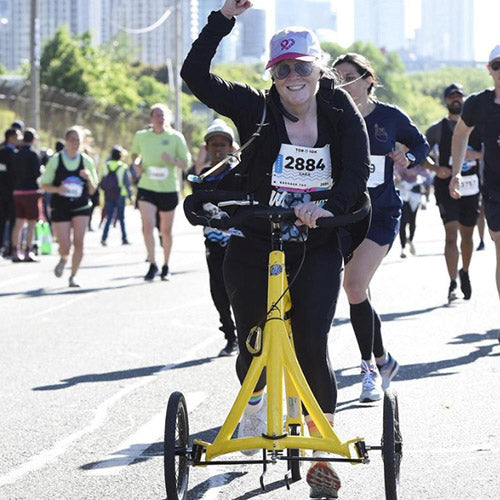
The destinations riders describe are small and specific. Not "feeling better" in the abstract. The farmer's market. The grandchild's recital. The dog past the corner where she used to turn back. The 3.5 kilometer walk in the park. The 5K. The classroom.
The pattern across hundreds of testimonials is the same. The riders don't talk about the bike. They talk about where it took them.
What the Alinker isn't
Honest disclosure, because the Alinker community is unusually direct about this.
The Alinker is not a wheelchair replacement. It is not built for anyone who can no longer bear any weight on their legs at all. It is not designed for primary indoor use. Most riders keep their cane for kitchen-to-bathroom distances. There's a "wobble week" while the saddle adjusts and the body learns the motion.
The Alinker works best for the large, often-overlooked group in the middle. People who can still walk, but find their range is shrinking. People who want to stretch it back out.
If that doesn't describe the rider, the Alinker is not the right bike. The community will say so directly.
Finding your size
The Alinker comes in three sizes. The right size depends on inseam, not height.
| Size | Minimum Inseam |
|---|---|
| Happy Small | 22" |
| Small | 27" |
| Medium | 32" |
If you're between sizes or not sure, measure your inseam and reach out before ordering. Getting the size right is the single most important part of the fit.
Three ways to pay
Most riders buy directly. Visit the website, pick a size, place an order, and the bike ships from the US warehouse.
For those who need it, there are two more ways in:
0% rent-to-own through cocopay.co. Start with a deposit and pay the rest over eight months.
Community crowdfunding through cocopay.co. The same pathway more than 257 community campaigns have used over the past decade, often topped up by other riders.
The part that ties it all together
The Alinker is not for everyone.
It is for the person who has been quietly refusing every mobility aid they've ever been offered. It is for the person whose world has gotten smaller in ways nobody around them quite understands. It is for the person who has been told they need to give something up, and refused.
The most-quoted Alinker testimonial in mobility communities ends with one sentence. After all the longer reviews. After all the photos. After all the videos and the forum posts. The line riders keep coming back to is this:
That is the actual offer. Not "we'll fix you." Not "we'll cure you." Not "we'll make anyone feel young again." It is something much smaller and much bigger at the same time.
You stop being the patient. You become the person with the cool bike.
The community has been here for ten years. The rest is up to whoever just finished reading.
Ready to make your world bigger?
See The Alinker →"You don't have to be the patient anymore. You can just be the one with the cool bike."