
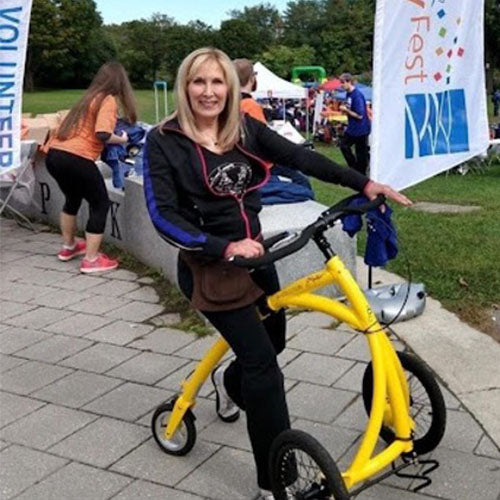
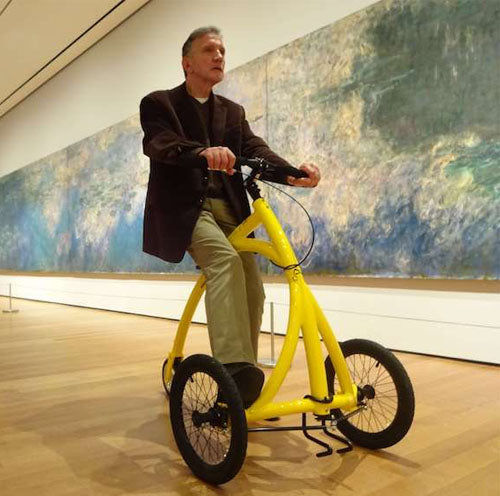
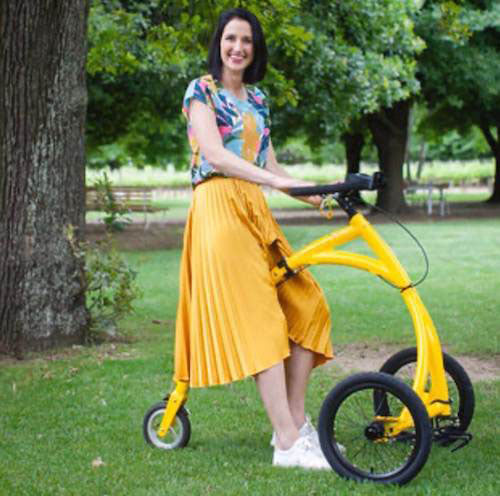
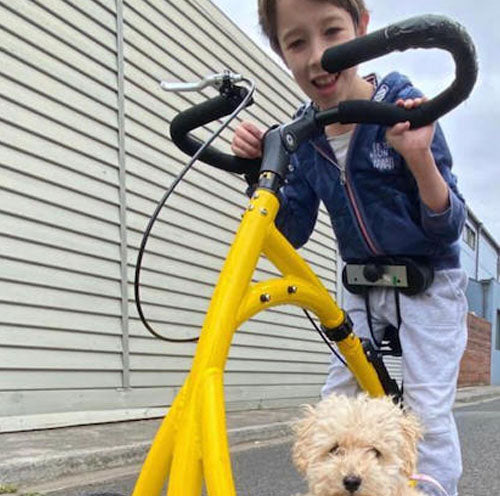

Movement is medicine, connection, life, fun, strength and power
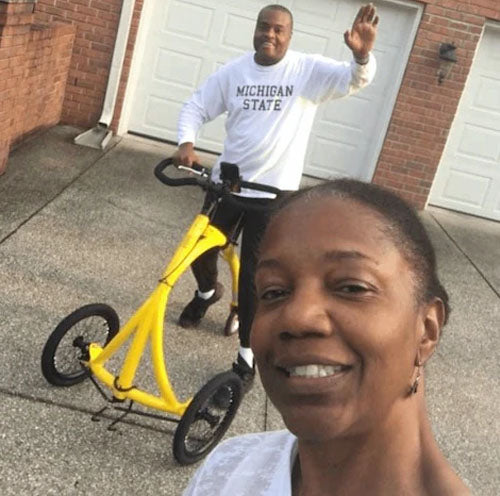
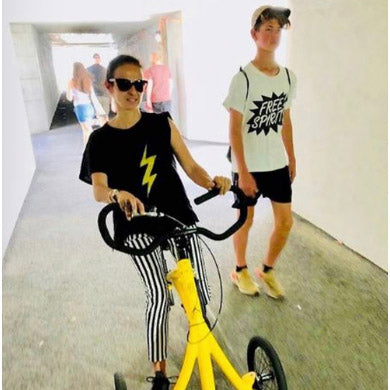
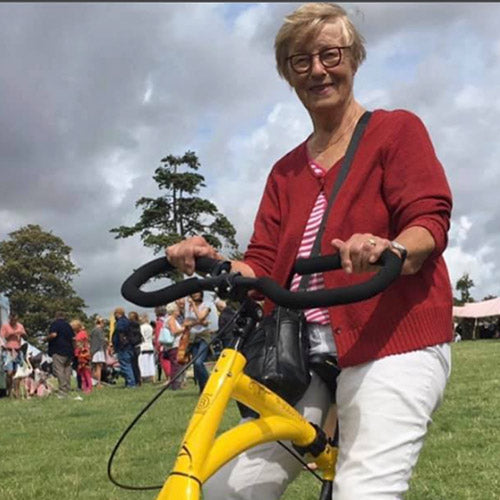
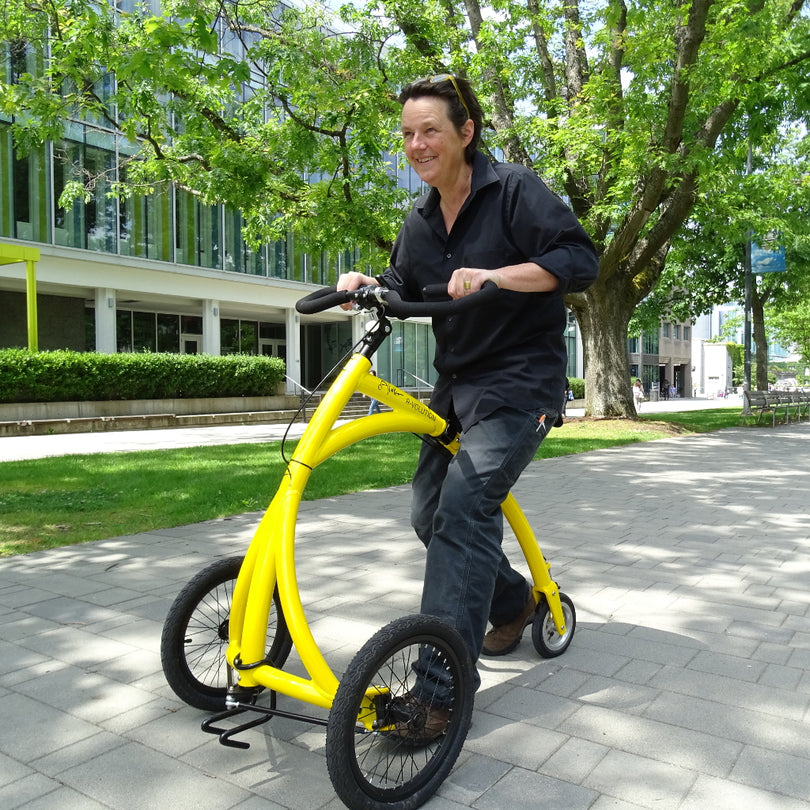
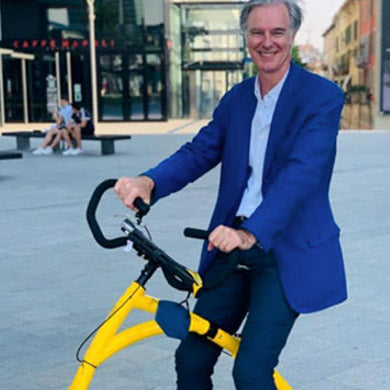
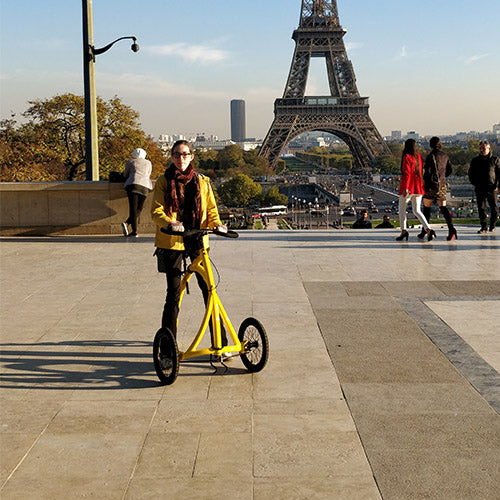
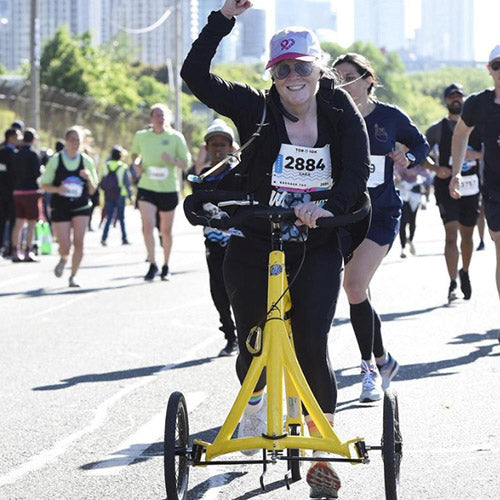
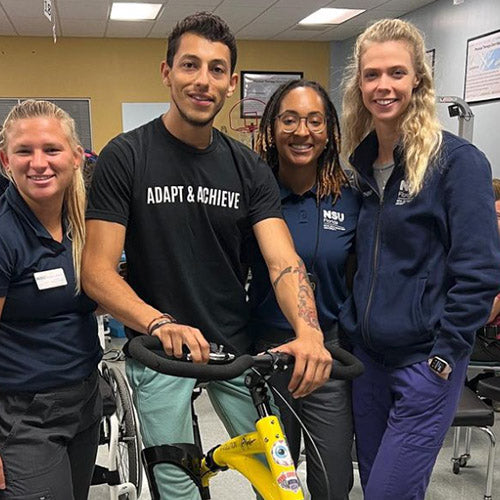
The Alinker is not a wheelchair and not a walker, but a walking bike your own legs power. With the Alinker, open your world.
- Go the distance again and feel good the next day
- Eye to eye in every conversation, talked to and not about
- Your seat comes with you, so you rest whenever you want
- Folds in half and the wheels pop off for the car
See if the Alinker is right for you
7 quick questions. About 60 seconds.
Who are we finding a fit for?
What makes getting around hard right now?
Choose as many as apply.
Standing up, can you lift one foot off the ground?
Even for a second. This is the one thing the Alinker really asks of you, because your own legs do the moving.
Roughly what does the rider weigh?
The frame is engineered to a set limit, so this one matters for safety.
What is the rider's inseam?
Stand against a wall with a hardcover book loosely between your legs, then measure from the floor to the top of the book. Alinker inseam runs to the ground, not to the seam of your trousers.
The Alinker is $2,830. If you were to get one, which would work best for you?
Insurance rarely covers a device meant to keep you well rather than treat you once you are unwell, so we built our own routes instead. None of them are a commitment right now.
Where should we send your result?
Your fit, your size, and the ways riders pay for theirs.
Please enter a valid email address.
Your information is safe with us.
We will never sell or share it. No obligation to buy.
A closer look at the Alinker
The Alinker is built to keep you walking. The seat carries your weight, your legs do the moving, and three wheels handle the balance. That is what lets riders cover distances their legs could not manage on their own.
Seat at standing height
You meet people eye to eye instead of looking up at them.
Padded saddle
Your weight rests here, so your legs steer and push instead of carrying you.
Adjustable steering bar
Standard bicycle parts, set to your reach and swapped for your own if you prefer.

Three wheels
It stands up on its own, so staying upright is never your job.
Rear brake
Hold it on a slope to keep a steady walking pace on the way down.
Quick-release wheels and saddle
Off in seconds. The frame is under 21 lb to lift into a car, 26 lb whole.
Who is the Alinker for?
Run out of energy long before they run out of day
Feel unsteady, and plan every outing around where they can sit
Can still move their legs, but not far enough to matter
Don't feel safe, or don't feel seen, in the device they use now
We don't sort people by diagnosis.
MS, stroke, Down syndrome, cerebral palsy, ataxia, arthritis, recovery from surgery,
or simply getting older. What matters is how you move, not what it's called.
What makes the Alinker different?
A scooter has a motor. A wheelchair has someone pushing. Both do the work your legs used to do, and legs that stop working tend to stay that way. The Alinker is the only device in this category that hands the job back to you.
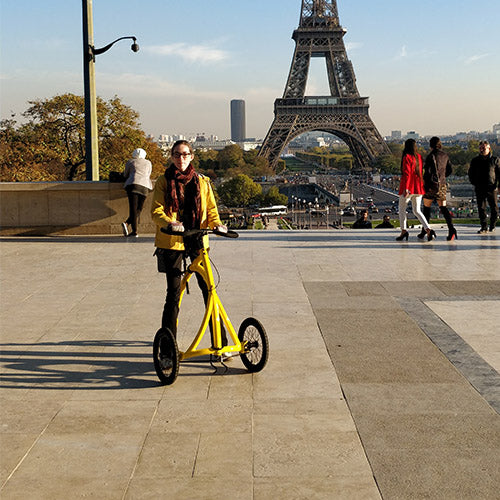
You do the walking, the bike does the rest.
People always ask where the pedals are. There aren't any, because you walk. Your legs propel it and your core stays engaged. The effort is the benefit, not the cost.
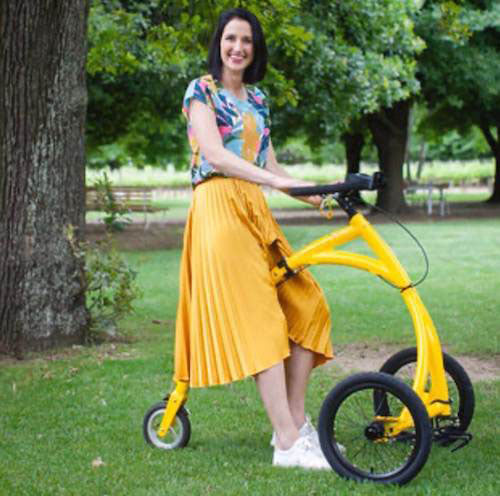
Balance stops being your job.
Two-wheeled walking bikes ask you to balance, which rules out most of the people who need one. The Alinker holds itself up. The seat takes your weight and the handlebars take the rest.
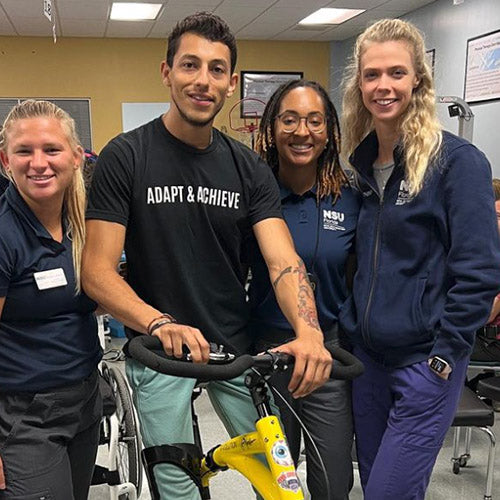
People talk to you, not about you.
Seated devices put you below everyone's sight line. Riders tell us the biggest change isn't the distance. It's that people look at them and talk to them again instead of over them.
How the Alinker compares to a walker, wheelchair or scooter
A rollator keeps your legs working but makes them carry you. A chair or a scooter carries you but retires your legs. The Alinker is the only one in this list that does both jobs at once.
| Alinker | Rollator / walker | Wheelchair | Mobility scooter | |
|---|---|---|---|---|
| Your legs do the moving | Yes | Yes | No, your arms or a helper | No, a motor |
| Your weight is carried for you | Yes, on the seat | No, your legs carry it | Yes | Yes |
| Rest without hunting for a bench | Your seat travels with you | Stop first, then perch | Yes | Yes |
| Eye level with people standing | Yes | Yes | No, seated height | No, seated height |
| What limits your range | Your legs, and they get stronger | Your legs, carrying your weight | Your arms, or whoever is pushing | Battery charge |
| Needs charging | No | No | No | Yes |
| Into a small car on your own | Folds, 26 lb, under 21 lb in pieces | Yes | Depends on the model | Usually needs a lift or ramp |
Scroll the table sideways to see every column
Alinker figures are from our published specifications. Other devices vary by model, so compare against the one you are actually considering.
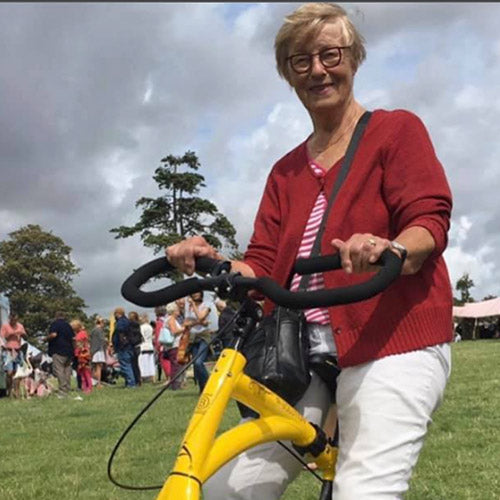
What problem does the Alinker solve?
Most people who find us can still walk. They just can't walk far enough for it to count. The parking lot. The length of the shop. The corner where the dog walk turns back. That's the gap the Alinker closes.
How does the Alinker help your brain?
There is no motor on the Alinker, and that is deliberate. A single outing is a few thousand small demands on your legs and your balance, and your brain is paying attention to every one of them.
You move
Every push off, every steer, every small correction to stay on line is your body sending a signal up to your brain. Not once or twice, but continuously, for as long as you are out.
Your brain answers
Brains keep and strengthen the pathways they use. Give yours movement to work with, regularly, and it has something to build on. This is what we mean by activation.
It builds on itself
Riders describe it arriving over weeks and months rather than days. Steadier on their feet, more stamina, and outings that keep getting longer.
A motor will carry you further today. Only your own legs will carry you further next year.
Watch real Alinker riders
Not a product demo. Riders in their own neighbourhoods, in their own words.

Mobility is emotional
Why the thing you move around on changes how people treat you, and how you feel about leaving the house.

MS and activating your brain
What happens when the legs keep working instead of being carried.

After stroke, they found the Alinker
Getting back outside when one side isn't cooperating yet.

John · Parkinson's · Joy
Freezing gait, shuffling, and what changes once you're rolling.
What Alinker riders say

“With the Alinker my world has expanded greatly. I can't imagine living my life without it.”

“People talk to me rather than asking Martin about me. I am at the same level as my friends.”

“I couldn't keep up and lagged behind. Now my wife has trouble keeping up with me.”
What Stanford found
In a collaborative study with Stanford University, participants preparing for total knee replacement were given an Alinker before surgery and used it through the three-month recovery period.
The finding was that it reduced medical costs. Not only quality of life. Actual spend. Which turns the question from what the Alinker costs into what not having one costs.
Observational study of wheeled device use after total knee arthroplasty, registered on ClinicalTrials.gov. Full study available on request. Individual results vary. The Alinker is a mobility device, not a medical treatment.
Riders describe going from a few hundred metres to several kilometres in a single outing
One rider's neurologist confirmed a rebound in leg strength within three months of daily use
Owners consistently describe reaching for it every single day, not occasionally

BE's mother would rather stay home than be seen with a walker. So BE, an architect, designed the thing her mother would actually want to be seen on, and built it into the Alinker.
That is why it is bright yellow. That is why you sit high. Every choice on this frame was made by someone who understood that the object has to be something you are proud to arrive on.
Ways to pay for your Alinker
Insurance rarely funds anything that keeps people well rather than treating them once they are unwell. So we built our own routes instead, and one of them does not ask you to find the money at all.
Crowdfund it
We host the campaign on our own site and coach you through it. Your community pays for it together.
- We build the campaign page with you
- Stripe holds every contribution
- Supporters are only charged once you hit your goal
- You never handle any of the money
- You can run it for a spouse or a child you care for
Campaigns start from a waiting list, so this route takes longer than the others.
Rent to own at 0%
A deposit, then monthly payments. You pay the same in total as you would buying it outright.
- No interest, ever
- Skip or cancel a payment when you need to
- It is yours at the end
- Ships in the same one to two weeks
Worth knowing: rent to own is its own agreement. The initial four month payment is not reimbursable, and the 15 day return applies to full price purchases.
Buy it outright
The simplest route. Order it, ride it, and decide inside the return window.
- Ships in one to two weeks
- 15 day return window
- Two year warranty once you register it
- Real people on support, never a bot
Finish the quiz and we will show you your size and the price for it.
Frequently asked questions
What does it cost, and how would I pay for it?
Price depends on your size, so the quiz gives you your size and your price together rather than a number that might not apply to you.
However it lands, there are three ways to get one: crowdfund it with your community, rent to own at 0% interest, or buy it outright. The section above walks through all three.
Will my insurance cover it?
Usually not. Insurers tend to fund treatment rather than the things that keep people well in the first place, and the Alinker sits firmly in the second category.
That is exactly why we host our own crowdfunding platform, which has funded 204 campaigns so far, and why we offer rent to own at 0% interest. You do not have to wait for an insurer to agree with you.
Do I need good balance to ride one?
Less than people expect. It stands on three wheels and holds itself up, and the seat takes your weight, so you are not balancing the way you would on a bicycle.
What we do look for:
- Some command over your legs
- Able to lift one leg while standing on the other
- Aware of what is going on around you
- Able to judge your own abilities and know your limits
If that sounds like you, the quiz will confirm it in about a minute.
Can I get it into my car by myself?
The whole bike weighs 26 lb and folds. The wheels and saddle come off with quick releases, and once they are off the frame is under 21 lb to lift.
Alinkers have gone into a Toyota Yaris, a Suzuki Swift and a Smart car. With a bigger boot or the rear seats down, you can fold it and roll it straight in.
What about hills?
It is at its best on flat and gently rolling ground. Some riders treat a slight rise as the workout and get stronger for it, and others prefer to route around them.
Going down, the rear brake holds you at a steady walking pace. Keep it under 3 mph and stay in control. It is a walking bike, not a downhill bike.
How much weight does it take?
The current design supports riders up to 265 lb.
How do I know which size I am?
Sizing runs off your inseam, not your height. The Happy Small starts at a 22" inseam and runs to 26.5", then Small and Medium take it from there.
The quiz asks for the measurement and tells you which one is yours, so you are not guessing at checkout.
How quickly does it arrive, and is it covered?
When it is in the warehouse, one to two weeks. It arrives with a two year warranty, which starts once you register the serial number on our site.
Support is staffed by real people, several of whom ride an Alinker themselves. No bots.
15 days to change your mind
Ride it, then decide. If it isn't right for you, contact us and we'll walk you through sending it back.
A real person, before you buy
If your answers aren't clear cut, we'll put you on a call with someone who will tell you honestly whether this suits your body.
Pay over 12 months, interest free
Split it across a year at no extra cost. Same total price, twelve payments, no interest and no fees.
Is the Alinker right for you?
Six questions about how you move. We'll tell you honestly whether the Alinker is right for you, and which size fits.
Start the fit checkNo obligation. We'll tell you if it isn't a fit.
The Alinker is a mobility device, not a medical treatment, and is not intended to diagnose, treat, cure or prevent any condition. It does not currently have a specific code for Medicare or Medicaid reimbursement. Many buyers are reimbursed through an HSA or FSA with a Letter of Medical Necessity; eligibility is determined by your plan administrator. Individual results vary.